


Start with one planting zone, not a collection
Use one compact planting zone per window. A spring window sill looks considered when the plants share one visual boundary. It looks messy when every pot sits at a different depth, spills over the frame, or leaves a separate saucer exposed. The fix is simple: choose the usable width, reserve one section for plants, and leave the rest empty.
Measure the sill before buying anything
Measure the flat depth from the glass to the front edge, then measure the clear width between the side walls. Record both numbers in centimeters. A sill that measures 18 cm deep should not receive a tray that is 18 cm deep; leave at least 2 cm at the back for curtains, window locks, and cleaning. A 60 cm sill usually works better with a 40 to 45 cm planting zone than with six separate pots across the full length.
Choose a visual limit
Set a hard limit of three plant shapes: one upright plant, one low plant, and one trailing plant. Repeat one pot color so the foliage becomes the focus. Keep empty space beside the planting zone. That gap is not wasted space; it gives you room to open the window, wipe the glass, and place a coffee cup without knocking over a pot. Spring light changes quickly, so a flexible arrangement beats a packed display.
Sunlight decides the layout before style does
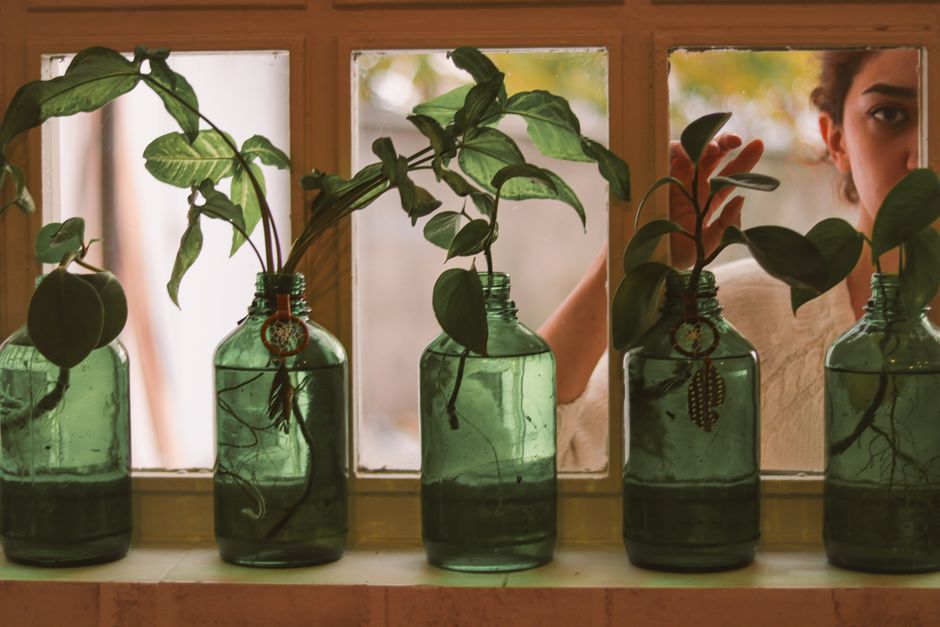
Place plants by light, not by height
Put sun-loving herbs and compact flowering plants on the brightest side of the sill. Keep leafy plants that scorch easily farther from direct afternoon glass. A south-facing window can deliver several hours of strong light in spring, while a north-facing sill may offer bright shade with little direct sun. The glass, curtain, nearby building, and tree cover all change the result, so watch the sill for one full morning and afternoon before buying plants.
Keep a clear line to the window
The best arrangement leaves the lower part of the glass open. Do not hide the handle, air vent, or opening section behind foliage. A plant that grows well but blocks ventilation has failed its job in a small room. Rotate pots every week so plants do not lean toward the glass, and move tender leaves back from hot afternoon sun when the glass feels warm. The cleanest spring setup is the one you can adjust in under two minutes.
Build the arrangement in five controlled steps
- Clear the sill completely. Clean dust, inspect the paint, and check that the window opens without resistance.
- Mark the planting zone with removable tape. Leave 2 cm behind the tray and at least 5 cm beside the opening section of the window.
- Place the largest pot at the back or on the least visible side. Smaller plants should not hide it or force leaves against the glass.
- Add a waterproof tray with a raised edge. Test it with a cup of water before placing it on the sill. A tray that leaks is decoration with a delayed repair bill.
- Water plants at the sink, let them drain for ten minutes, and return them only when the base of each pot is no longer dripping.
Keep the tallest object below the sightline
For a calm room, keep the tallest plant below the lower third of the window unless the sill is wide and the window is rarely opened. A 20 to 30 cm plant height usually adds color without turning the glass into a green wall. The IKEA SOCKER greenhouse, at roughly 45 x 22 x 35 cm, is better for a deep sill, plant bench, or side table than for a narrow standard window ledge.
Use repeated spacing
Leave roughly 3 to 5 cm between pot edges. Uneven gaps make a small display look accidental. If two pots need different watering schedules, separate them with a thin divider or place them in individual cachepots inside the same tray. The tray groups the display, but it should not trap water between containers.
Which plants belong on a spring window sill?
What works on a bright sill?
For a bright spring sill, choose thyme, basil, chives, aloe vera, jade plant, or a compact geranium. These plants reward direct light, but they still need airflow and careful watering. Basil may need frequent harvesting to stay compact. Aloe and jade prefer the soil to dry between waterings. A plant can tolerate sun and still fail in a sealed, humid corner behind a curtain.
What works on a lower-light sill?
For bright shade, choose pothos, cast-iron plant, peperomia, or a small snake plant. Keep the strongest-growing plant at the back and prune runners before they reach the handle. If the sill is cold at night, raise pots on a cork mat rather than pushing them against the glass. The best choice for a narrow, lower-light ledge is a small peperomia because it stays compact and does not need a large reservoir.
When should you skip a plant?
Skip plants with wide, fast-growing leaves when the sill is less than 15 cm deep. Skip heavy ceramic pots if the sill is a floating shelf or shows any flex. Skip a collection of seedlings if you will not check moisture daily. The right plant is the one that matches the light, depth, and care time already available in the room.
Water control matters more than the tray’s appearance
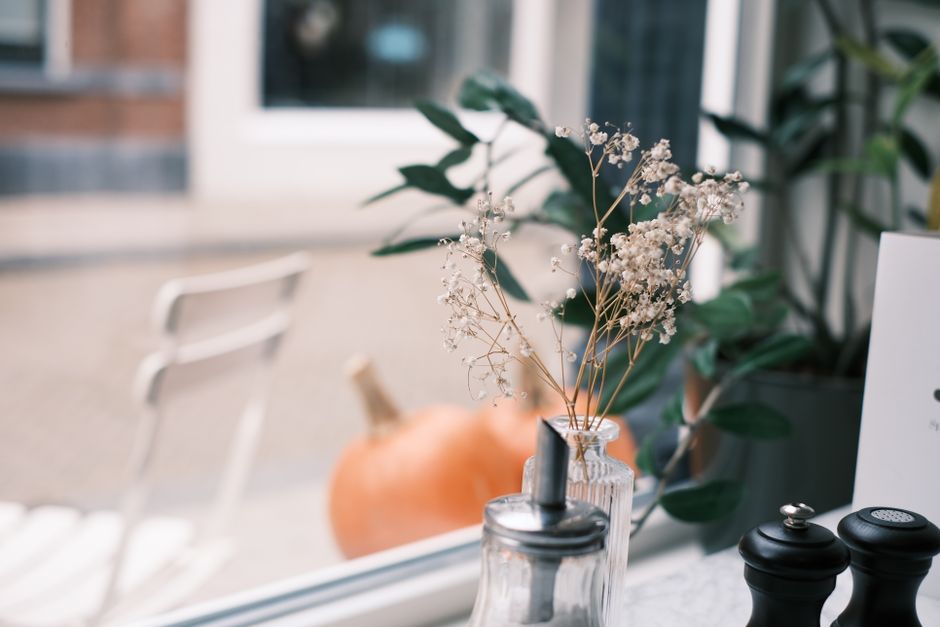
Most window sill damage starts with routine watering, not dramatic accidents. A pot leaks slowly, the tray stays wet, and the finish swells or stains. That is why a good setup treats water as a design problem from the start.
Separate watering from display
Water every plant at the sink or in the bathtub. Let the pot drain fully before it goes back on the sill. Do not pour water into a decorative outer pot and assume the plant will absorb the excess. Roots need air as well as moisture, and trapped water creates a sour smell, fungus gnats, and soft roots. Empty any tray that holds standing water after ten minutes.
Match the pot to the material below it
Painted wood needs a truly waterproof barrier. Stone can stain from fertilizer salts. Metal can rust when water sits underneath a pot. Use a tray with a raised lip and a removable liner when possible. The Elho Green Basics Growpot works well as an inner grow pot, but its drainage means it must sit inside a protective tray. The Lechuza CUBE Glossy 14 includes a water-reservoir style design, but that does not remove the need to follow its fill level and avoid overwatering.
Check the sill once a week. Lift every pot, wipe underneath, and inspect for damp patches. This takes less than five minutes and catches damage before the wood or paint changes color.
Three compact setups that stay tidy through spring
For a narrow kitchen sill, use two 10 to 12 cm herb pots on one 28 x 14 cm tray. Put chives at the front and basil or thyme behind it. Leave the opening side clear. This setup gives you useful foliage without turning the sill into storage.
Best setup for a bright living-room window
Use one 14 cm pot, one low 10 cm pot, and a shallow waterproof tray. A compact aloe or jade plant provides the upright shape, while peperomia fills the lower space. The Lechuza CUBE Glossy 14 is the strongest choice for the main pot because its square footprint uses the sill efficiently. Keep the total arrangement under 35 cm wide if the window opens inward.
Best setup for propagation
Use the IKEA SOCKER greenhouse only when the sill is deep enough to support its roughly 45 x 22 cm footprint and the window will remain usable. For a standard narrow sill, the Garland Windowsill Propagator, commonly sold at about 38 x 24 cm, is more practical as a temporary spring station, but it still needs a waterproof mat below it. Remove weak seedlings quickly. A propagation tray becomes clutter when every cutting stays forever.
Do not buy a tiered plant stand for a shallow sill. It adds height, blocks light, and makes watering awkward. Do not buy matching pots in six sizes just to fill empty space. Empty space is what keeps the arrangement useful.
The winning formula for spring 2026 is simple: one planting zone, three plants at most, one waterproof tray, and enough clear sill to open the window and clean it.