

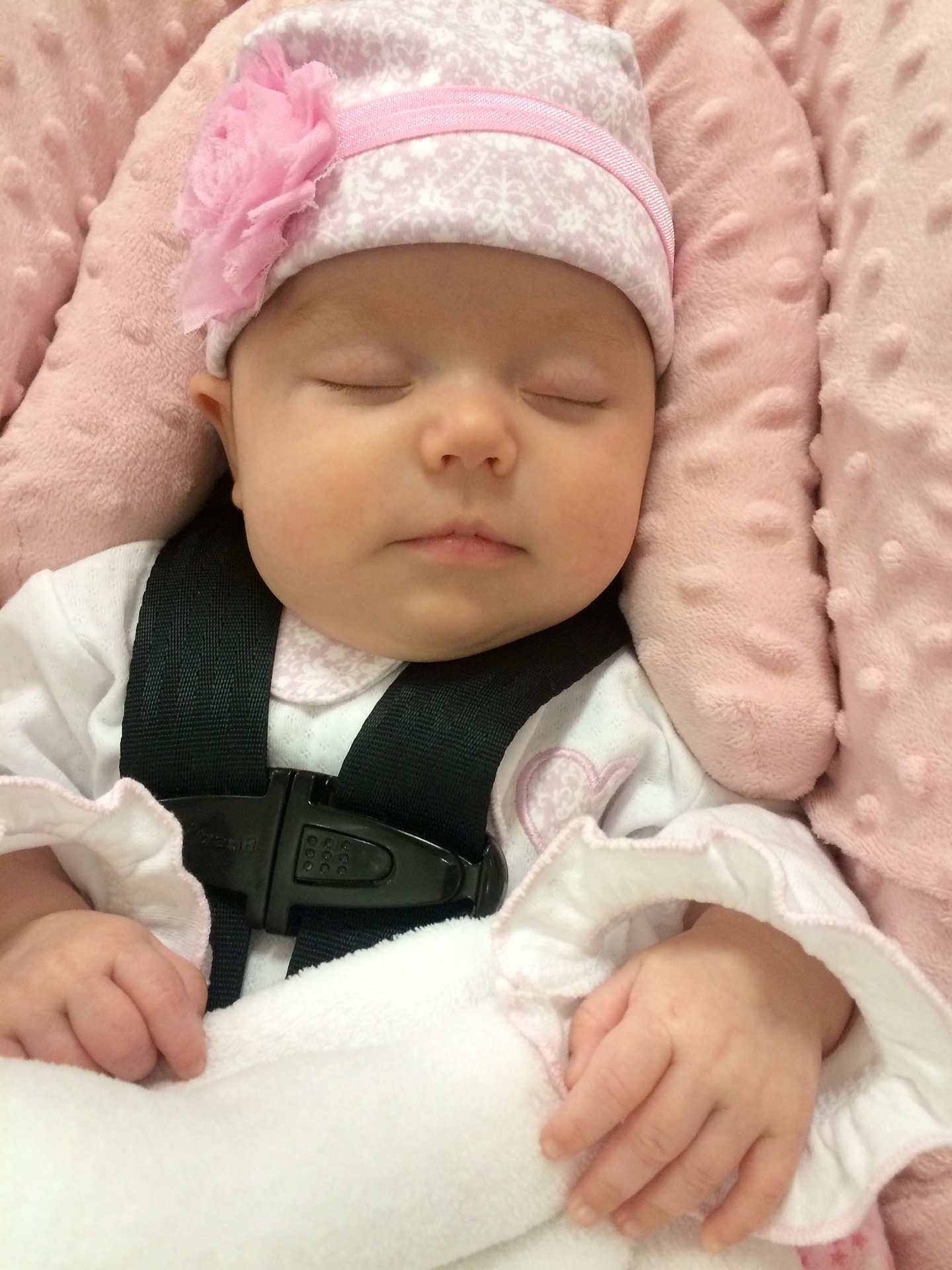
Is your child’s car seat installed correctly right now? Not ‘do you think so’ — but actually verified, by someone who knows what they’re looking for?
Here’s an uncomfortable data point: NHTSA research shows roughly 59% of car seats are misused in some way. Most of those errors aren’t obvious. Parents who’ve done everything they thought was right — read the manual, watched the install video, felt the seat click into place — are sometimes still getting it wrong. The errors tend to be small, specific, and invisible until they matter.
This covers the actual mechanics of car seat safety: what the guidelines say, why the most common mistakes happen, how to choose a seat worth buying, and how to check if your installation is doing its job. This is not a substitute for a certified Child Passenger Safety Technician (CPST) inspection — but it will give you a clear picture of what to look for.
What Car Seat Laws Require vs. What Actually Protects Kids
State car seat laws exist, but they don’t all agree with each other — and they don’t always reflect current safety research.
Most state laws use age thresholds: rear-facing until 2, booster until 8. The problem is that the American Academy of Pediatrics and NHTSA have both moved away from age-based guidance toward size-based guidance. Your child should stay rear-facing until they outgrow the rear-facing limits of their specific seat — not until a birthday. They should stay in a harness until they outgrow their forward-facing seat’s limits. They should use a booster until the seat belt fits correctly across the shoulder and lap — usually around 4 feet 9 inches, somewhere between ages 8 and 12.
A 7-year-old who legally qualifies to use a seat belt alone in their state may not be safe doing so. If the shoulder belt crosses their neck instead of their chest, the injury risk in a crash is real. Legal and safe are different standards.
Where the Authoritative Guidance Comes From
Two sources worth reading directly: the AAP’s clinical car seat recommendations and NHTSA’s Car Seats and Booster Seats consumer guide. Both are freely available and have nothing to sell you. When they conflict with your state’s minimums, follow the research — not the law’s floor.
Marketing Claims That Lack Evidence
Seat manufacturers aren’t required to prove that ‘advanced side impact protection’ or ‘safety surround’ features outperform standard designs in real crashes. NHTSA doesn’t publish overall safety ratings for car seats the way they rate vehicles. Every seat sold legally in the U.S. has passed the same federal crash test minimums. The performance gap between a $70 seat and a $450 seat is much smaller than the marketing gap.
Bottom Line: State law sets the floor. AAP and NHTSA guidelines define what’s actually protective. When they differ, follow the research.
Rear-Facing Safety: Why the Research Points to Staying Longer
This is the part most parents misunderstand — and the part with the highest stakes.
Across the country, children get flipped forward-facing somewhere around 12 to 18 months. The usual reasons: legs look cramped, the child seems uncomfortable, parents assume 1 year old is old enough. None of these are safety arguments. They’re comfort arguments. In frontal crashes — which account for the majority of serious collisions — they’re the wrong frame entirely.
In a frontal crash, a rear-facing seat acts as a shell. It absorbs crash energy across the child’s back, head, and neck simultaneously. The child’s body, the seat, and the crash forces all move together. No single part of the spine takes a disproportionate load.
A forward-facing child hits differently. The harness stops the body. The head continues moving forward, loading the cervical spine — the part most vulnerable in young children, whose heads are proportionally large and whose neck muscles haven’t fully developed. This isn’t a marginal difference. It’s why every major pediatric safety organization gives the same advice.
The AAP’s current position doesn’t set an age for the switch. It says: keep children rear-facing for as long as their seat allows. A typical 2-year-old weighs around 28 lbs. Most convertible seats today rear-face to 40 or 50 lbs. There is no weight-based reason to flip a typical 2-year-old forward before they hit the seat’s height limit.
The ‘Legs Look Cramped’ Objection
Bent knees against the vehicle seat back are not a safety problem. Leg injuries from this position aren’t documented in rear-facing crash data. A broken leg heals. Spinal cord injury often doesn’t. That comparison sounds stark, but it’s the accurate frame for the decision. Discomfort and danger are different variables.
The Actual Trigger for Switching Forward
Flip a child forward-facing when they hit the seat’s rear-facing height or weight limit — not before. The height limit is typically when the child’s head is within 1 inch of the top of the seat shell. The weight limit is printed on the seat itself. When they hit either limit: switch. Not at a birthday, not because of leg position.
Six Installation Mistakes That Look Fine From the Outside
These are the errors CPSTs find most often at check events. Every one of them is correctable in under 10 minutes once identified.
- Harness straps too loose. Pinch test: after tightening, pinch the strap at the child’s collarbone. If you can grab a fold of fabric, it needs to be tighter. At 40 mph, even a small amount of slack translates to significant forward movement before the harness engages.
- Chest clip at the belly instead of the chest. The clip belongs at armpit level — across the sternum. Worn at the stomach, it can cause serious abdominal injury in a frontal crash. This is among the most common errors found and takes seconds to correct.
- More than 1 inch of movement at the base. Grab the seat at the belt path — not the top, not the canopy — and push firmly side to side, then front to back. More than 1 inch of movement means the install isn’t secure. Usually caused by a belt that isn’t tight enough or a retractor that isn’t locked.
- Using LATCH and the seat belt simultaneously when not approved. Most seats specify one method or the other. Using both when not explicitly permitted by the manual can create conflicting forces in a crash. Some newer models allow both — always check your specific seat’s manual.
- Puffy winter coats worn under the harness. A thick coat compresses 2 to 3 inches under crash forces. What feels snug with the coat on has significant slack the moment the coat compresses. Use a car seat poncho instead, or drape the coat over the already-buckled harness.
- Wrong recline angle for rear-facing infants. A newborn’s airway can be compromised if the seat is too upright. Most seats have a built-in level indicator or an angle adjustment lever. The target is typically 30 to 45 degrees. Check it every time the base is reinstalled in a different vehicle.
Choosing the Right Car Seat for Your Child’s Current Size
The right seat fits your child now, installs correctly in your vehicle, and gets used correctly every ride. A $400 seat installed wrong is less safe than a $70 seat installed correctly. Price matters less than fit and correct use.
| Seat Type | Best For | Rear-Facing Limit | Example Model | Approx. Price |
|---|---|---|---|---|
| Infant Seat | Newborn to ~12 months | Up to 35 lbs | Chicco KeyFit 35 | $200–$230 |
| Convertible | Birth through toddler | Up to 40–50 lbs | Graco Extend2Fit 3-in-1 | $180–$230 |
| All-in-One | Birth through booster stage | Up to 50 lbs | Britax One4Life ClickTight | $350–$420 |
| Slim Convertible | Multiple kids, tight back seat | Up to 50 lbs | Diono Radian 3RXT SafePlus | $320–$350 |
| High-Back Booster | After harness stage, ~ages 4–10 | N/A (belt-positioning) | Graco Tranzitions 3-in-1 | $80–$100 |
Which Seats Justify Their Price
The Chicco KeyFit 35 earns consistent praise from CPSTs because it installs correctly more reliably than most infant seats. The level indicator is readable, the base clicks firmly, and the narrow profile fits most vehicle seats without a fight. For an infant seat, this is the benchmark.
The Graco Extend2Fit is the practical convertible for parents who want to maximize rear-facing time without spending $350. It rear-faces to 50 lbs — beyond what most children will weigh before hitting the height limit. The Britax One4Life ClickTight justifies its premium through its ClickTight installation system: thread the seat belt through an internal channel, close a panel, and the system creates a tight, repeatable install that’s hard to get wrong even across different vehicles.
For families with multiple children and a compact back seat, the Diono Radian 3RXT SafePlus is designed to fit three car seats across in most full-size vehicles — a real-world problem most seats can’t solve. Budget pick: the Cosco Mighty Fit 65 DX at around $65 meets all federal standards. Correctly installed, it’s as protective as any seat at three times the price.
Bottom Line: First-time parents wanting the easiest correct install: Chicco KeyFit 35 as an infant seat, then Graco Extend2Fit for the convertible stage. If you’d rather buy once: Britax One4Life ClickTight. Tight budget: Cosco Mighty Fit 65 DX.
How to Verify Your Car Seat Is Actually Installed Correctly
The 1-Inch Rule
Grip the seat at the belt path — not the top, not the canopy handle — and push firmly side to side, then front to back. More than 1 inch of movement in any direction means it’s not secure. Retighten the belt, lock the retractor, or re-route the LATCH connectors and start the install over.
Harness Slot Height: Above or Below the Shoulders?
Rear-facing: harness slots should sit at or below the child’s shoulders. Forward-facing: at or above. The harness geometry differs between orientations. Wrong slot height means crash forces aren’t distributed correctly across the child’s body — even if the straps feel snug.
When to Stop Using LATCH
LATCH has a combined weight limit — the child’s weight plus the seat’s weight. For most seats this is 65 lbs combined, but your specific manual will have the exact number. Above that limit, the vehicle seat belt is the correct installation method and often creates a stronger hold. Many parents keep using LATCH well past this limit without knowing it has one.
Free Professional Inspections
NHTSA maintains a searchable database of certified inspection stations at nhtsa.gov. Fire stations, children’s hospitals, and some police departments offer free checks by CPSTs. A 15-minute inspection is worth doing with any new seat, any new vehicle, or anytime you have genuine doubts. These checks find errors that look correct to everyone except the person who knows exactly what correct looks like.
Register Your Seat the Day You Buy It
Car seat recalls happen, and manufacturers can only notify you if you’ve registered the seat. Two minutes on the manufacturer’s website. If you skip it and a recall is issued, you may not find out for months — or at all. Register it before the box goes in the recycling.
When to Replace a Car Seat — and Why Secondhand Seats Carry Real Risk
Replace any seat immediately after a crash where airbags deployed, the vehicle had to be towed, any occupant was injured, the door nearest the seat was damaged, or there’s visible damage to the seat itself. Crash-damaged seats can fail structurally in a subsequent impact without any visible sign of it. Don’t use one and find out.
Expiration Dates Are Structural, Not Commercial
Every car seat has a manufacture date stamped on the frame, usually with an expiration 6 to 10 years out. Plastic and foam degrade over time — particularly in vehicles that sit in direct sun through multiple summers. The structural performance of a 10-year-old seat is measurably different from a new one. Find the manufacture date on your seat and mark the expiration somewhere you won’t forget.
The Real Problem with Secondhand Seats
A seat from a garage sale, an online marketplace listing, or a generous stranger cannot be trusted. You don’t know its crash history. You don’t know how it was stored. You don’t know if a recall was ever addressed. The risk isn’t hypothetical, and the savings aren’t significant — not when a new, federally compliant seat like the Cosco Mighty Fit 65 DX costs $65 new.
A seat from a close family member who can provide verified, complete history — including no crashes and no open recalls — is a different calculation. But ‘barely used, trust me’ from a stranger is not verifiable information.
Bottom Line: When a seat’s history is unknown, buy new. The cheapest compliant seat on the market costs less than a standard ER copay.
Car seat technology and safety guidelines will keep improving as crash data gets more granular and seat designs advance. The fundamentals — rear-face as long as the seat allows, keep the harness snug, verify the install, register the seat — have been stable for over a decade. What shifts over time are the specific numbers: weight limits, height thresholds, installation system refinements. Worth revisiting every time a child moves to a new seat type.