

You’ve packed the bags. The cooler is loaded. The kids are buckled in. Then you hit the highway and realize the phone mount is broken, the GPS is routing you through a toll road you wanted to avoid, and the back seat already looks like a bomb went off.
That’s the difference between planning a road trip and preparing for one. Planning is booking hotels. Preparation is making sure the trip doesn’t fall apart ten miles from home.
I’ve driven over 30,000 miles across the US in the last five years — solo, with a partner, and with a toddler. The trips that went well had one thing in common: I did the boring work before I turned the key. Here’s exactly what that looks like.
1. The Car Check That Actually Prevents Breakdowns
Most people check their tire pressure and call it done. That’s not enough. A breakdown on a road trip costs you time, money, and often a night in a motel you didn’t plan for.
Here’s the checklist I run 48 hours before departure. It takes 30 minutes.
Tires — Not Just Pressure
Check the spare tire too. I’ve seen three people with a flat spare on the side of I-40. The Michelin Defender 2 tires on my sedan have a treadwear rating of 820, which means they last. But even good tires need proper inflation. Use the pressure listed on the driver’s door jamb, not the sidewall of the tire. Those numbers are different. I run 35 PSI front, 33 PSI rear on my Honda Accord for a loaded trip.
Fluids — The Top Three
Engine oil, coolant, and windshield washer fluid. That’s it. Transmission fluid and brake fluid are important, but they don’t suddenly disappear overnight unless you have a leak. If your oil is low, top it off with the exact weight listed in your manual — for most modern cars, that’s 0W-20 or 5W-30. I use Mobil 1 Advanced Full Synthetic 0W-20 ($28 for 5 quarts at Walmart).
Battery — The Silent Killer
A battery that starts fine in your driveway can die at a rest stop in 110°F heat. Most auto parts stores test batteries for free. If your battery is more than 4 years old, replace it. The Optima YellowTop D35 ($230) handles deep discharges better than standard batteries, which matters if you run a cooler or charge devices with the engine off.
Verdict: Spend 30 minutes on this check and you eliminate 80% of roadside breakdowns. Skip it and you’re gambling.
2. Navigation Setup That Kills Surprises
Relying on Google Maps alone is a mistake. It routes you through the fastest path, not the best one. And it doesn’t tell you about construction, road closures, or the fact that the “scenic route” has 20 miles of unpaved gravel.
I use a two-app system. Here’s how it works.
Primary: Google Maps with Custom Layers
Before I leave, I drop pins for every gas station I plan to use, every rest stop, and every meal stop. I also check the “Avoid highways” and “Avoid tolls” toggles depending on the trip. For a recent 1,200-mile drive from Denver to Portland, I pre-saved 14 waypoints. That let me see the exact route, total time, and fuel stops before I started the engine.
Secondary: Waze for Real-Time Alerts
Waze is better than Google Maps for police, debris, and sudden slowdowns. I run Waze on a phone mounted to the dash and Google Maps on the car’s display. The iOttie Easy One Touch 5 phone mount ($28) holds an iPhone 14 Pro securely even on rough roads. It’s the only mount I’ve used that doesn’t wobble loose after an hour.
Paper Backup — Seriously
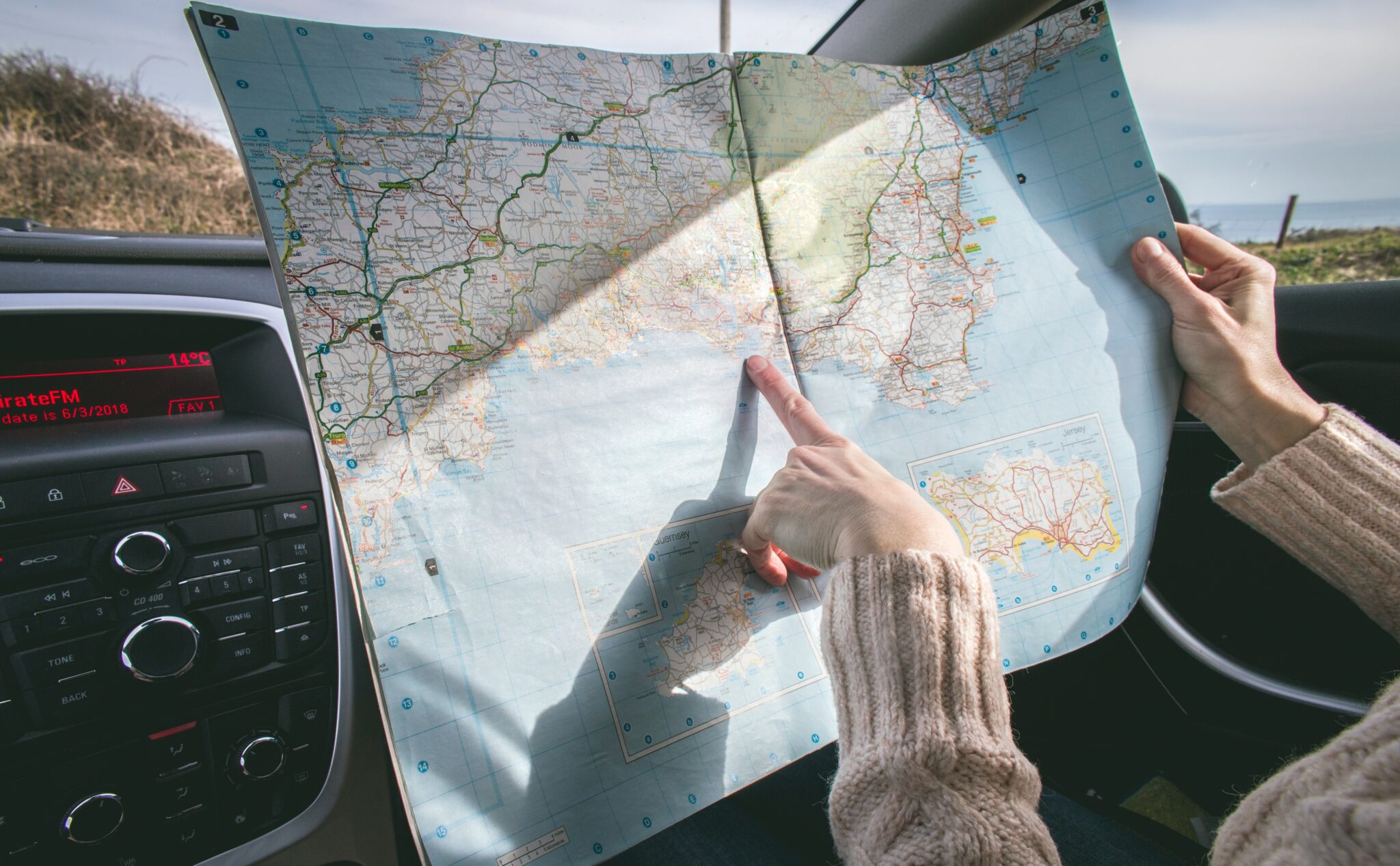
I print a one-page map with major highways and towns. When you lose cell signal in western Utah or northern Arizona, that paper map is the difference between finding your way and guessing. I use the Rand McNally Road Atlas ($15) — the large print edition. It shows all interstate exits and rest areas.
Verdict: Digital navigation is great until it isn’t. A two-app system plus a paper map covers every failure mode.
3. Packing System That Doesn’t Fall Apart
Packing cubes are not a gimmick. They solve a real problem: the back seat becomes a disaster zone within 20 minutes if you don’t compartmentalize.
Here’s the system I use for a family of three on a 7-day trip.
| Cube Color | Contents | Location |
|---|---|---|
| Blue | Adult clothes — shirts, pants, socks | Trunk, left side |
| Green | Kid clothes — 2 outfits per day, pajamas | Trunk, right side |
| Red | Toiletries, first aid, medications | Back seat floor |
| Yellow | Snacks, wipes, trash bags, toys | Front passenger footwell |
| Black | Electronics — cables, power bank, tablet | Center console |
The Eagle Creek Pack-It Specter Compression Cubes ($45 for a set of 3) are the best I’ve found. They compress clothes by about 30%, which means you can fit 7 days of clothes in a carry-on-sized bag. For the trunk, I use the REI Co-op Roadtripper Duffel 60L ($70) — it’s waterproof and has a separate shoe compartment.
Verdict: Color-coded cubes let you grab what you need without unpacking the whole car. That alone saves 10 minutes every time you stop.
4. The Snack and Hydration Strategy That Prevents Meltdowns
This is not about what to eat. It’s about preventing the hangry spiral that ruins the afternoon.
I learned this the hard way on a drive through Texas. No snacks. No water. Two hours in, everyone was irritable. We stopped at a gas station and bought $40 of junk food that made us feel worse.
Here’s the system I use now.
Snack Categories — Not Individual Items
I pack three categories: crunchy (almonds, pretzels, baby carrots), sweet (dried mango, granola bars, dark chocolate), and protein (beef jerky, cheese sticks, hard-boiled eggs). Each category goes in its own bin. The Rubbermaid TakeAlongs 3-cup containers ($8 for a 4-pack) are the right size for individual portions.
Hydration — One Rule
No open cups. Everyone gets a reusable bottle. I use the Hydro Flask Wide Mouth 32 oz ($45) — it keeps ice water cold for 24 hours. Fill them at the hotel or rest stop, not from gas station fountains. The water at gas stations often tastes like plastic.
Verdict: Pre-portion snacks into categories and ban open cups. That eliminates 90% of the mess and 100% of the “I’m hungry” arguments for at least 4 hours.
5. Emergency Kit That Actually Helps
Most emergency kits are junk. They include a tiny flashlight, a cheap multi-tool, and a first aid kit with three band-aids. That won’t help you change a tire in the dark or deal with a cut that needs more than a bandage.
Here’s what I carry. It fits in a small duffel under the passenger seat.
- Jump starter: The NOCO Boost Plus GB40 ($100) can start a dead battery 20 times on a single charge. It also charges phones via USB. I’ve used it twice in two years. Paid for itself both times.
- Tire inflator: The Viair 88P ($50) plugs into the 12V outlet and inflates a flat tire to 35 PSI in 4 minutes. It’s small enough to fit in the glove box.
- First aid kit: The Adventure Medical Kits Sportsman 100 ($35) has real supplies — trauma shears, clotting gauze, tourniquet, and 100+ bandages. It’s the same kit I take backpacking.
- Headlamp: The Black Diamond Spot 400 ($40) is brighter than any flashlight and leaves your hands free. 400 lumens, 6 hours on high.
- Emergency blanket and whistle: $10 total. If you break down in cold weather, a space blanket keeps you alive for hours.
Verdict: A jump starter and tire inflator are the two items that get you moving again. The rest is comfort. Don’t leave without at least those two.
6. The Pre-Trip Test Drive That Reveals Everything
This is the step almost everyone skips. And it’s the one that saves the most trouble.
The night before you leave, drive the car for 15 minutes with everything loaded — bags, cooler, kids, pets. Take a highway on-ramp. Brake hard once. Listen for rattles, squeaks, or vibrations. Check the air conditioning at highway speed. Test the cruise control.
I did this before a 2,000-mile trip and discovered the rear seat latch was broken. The seat would fold forward under hard braking. A $10 zip tie fixed it. If I hadn’t tested it, the seat would have dumped the cooler into the front seat on the first curve.
Verdict: A 15-minute test drive reveals problems you can fix in your driveway, not on the side of the road. Do it every time.
Road trips are unpredictable by nature. But the friction points — the breakdowns, the wrong turns, the mess, the arguments — are almost always preventable. The difference between a trip you remember fondly and one you just endure is the preparation you did when no one was watching.