

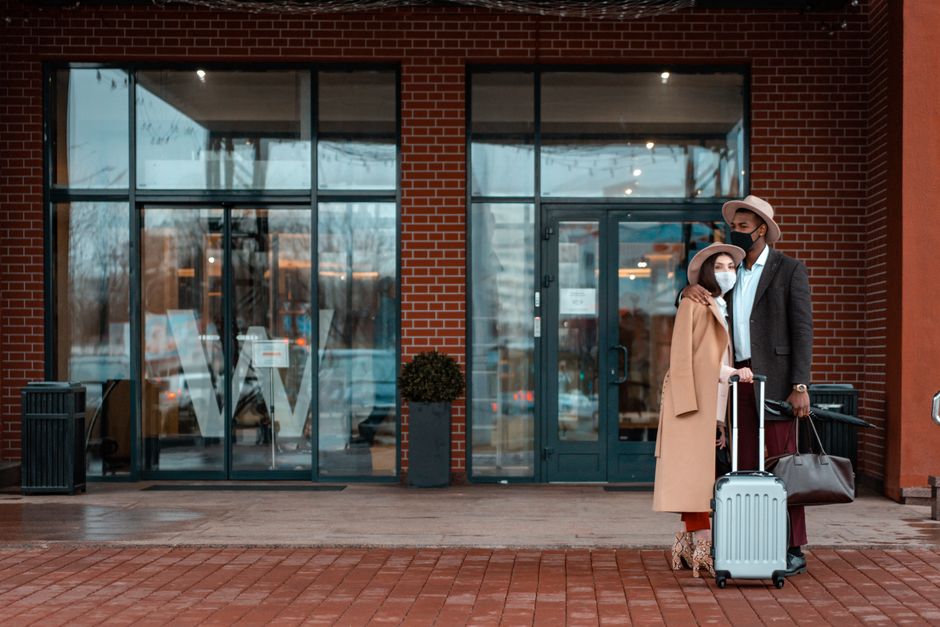
The most important recommendation first: buy fewer accessories than you think you need and spend more on each one you do buy. A $25 Anker PowerCore 10000 outperforms five $10 airport gadgets on every trip. Women who travel four or more times a year consistently own fewer accessories than occasional travelers — and they move through airports faster because of it.
Top Travel Accessories Compared Side by Side
These are the specific products frequent travelers actually carry. Not categories — actual items, with prices and the exact problem each one solves.
| Category | Top Pick | Price | Why It Earns Its Space |
|---|---|---|---|
| Packing cubes | Eagle Creek Pack-It Specter Cube Set | $29 | Ultralight at 1.6oz each; compresses a week of clothes into carry-on |
| Portable charger | Anker PowerCore 10000 | $25 | 10,000mAh, TSA-approved, charges an iPhone 15 twice |
| Neck pillow | Trtl Pillow Plus | $59.99 | Internal support frame beats horseshoe shape for actual sleep |
| RFID wallet | Travelon Anti-Theft Classic Wallet | $30 | Blocks 13.56MHz contactless frequency used by most cards |
| Noise-canceling headphones | Sony WH-1000XM5 | $350 | 30-hour battery, best active noise canceling under $400 |
| Electronics pouch | Bagsmart Travel Electronics Organizer | $20 | Holds cables, adapters, and earbuds tangle-free |
| Packable tote | Longchamp Le Pliage Tote (M) | $145 | Folds to purse size, carries 25L, machine washable, lasts years |
Where to start if you’re buying for the first time
Start with the bottom three items on this table: the Anker charger ($25), Bagsmart organizer ($20), and Eagle Creek packing cubes ($29). Total: $74. These three eliminate the most common airport frustrations before you ever think about headphones or pillows. Add the others on subsequent trips once you know what actually bothers you.
The one splurge that pays back immediately
Noise-canceling headphones. The gap between $30 earbuds and the Sony WH-1000XM5 on a 10-hour flight is significant. The Bose QuietComfort 45 ($279) is the alternative if the Sony fits too tightly — 24-hour battery versus 30, slightly larger ear cups, comparable noise canceling depth. Either one is the right answer. Neither is overkill for anyone who flies more than twice a year.
Why Accessory Overload Actually Makes Travel Harder

Buying packing cubes AND compression bags AND a garment folder is three solutions to one problem. Every duplicate accessory eats carry-on space, slows security screening, and costs money you did not need to spend. Pick one organizational system and commit to it entirely. The travelers who move through airports most efficiently carry the fewest accessories — not the most.
Security Accessories That Address Real Threats
Two specific risks affect women travelers most: opportunistic bag snatching in tourist-heavy areas and contactless card skimming in transit hubs. Most products marketed as anti-theft solve neither problem effectively. These do.
Contactless card skimming: what actually blocks it
Cards with the contactless symbol transmit on 13.56MHz. A wallet with RFID-blocking material physically interrupts that frequency — the Travelon Anti-Theft Classic Wallet ($30) is tested against ISO/IEC 14443. For destinations where pickpocketing is common (Barcelona, Rome, Marrakech, Prague), the Pacsafe Coversafe X75 Anti-Theft Hidden Belt ($35) goes further: it sits flat under clothing and holds a passport plus backup cash. This is not theater — it is a genuine barrier that requires a thief to reach under your clothing rather than into a pocket.
Bag theft: positioning beats gadgets
Nothing substitutes for carrying your bag in front of your body in crowded spaces. That said, the Travelon Anti-Theft Classic Crossbody ($65) has slash-resistant straps and lockable zippers independently tested against cutting tools. Right buy for open-air markets and metro systems in cities with elevated theft rates. Skip door alarms, money belts disguised as scarves, and novelty hidden-compartment items. They exist to sell, not to protect.
Choosing a Travel Bag: The Decision That Affects Everything Else
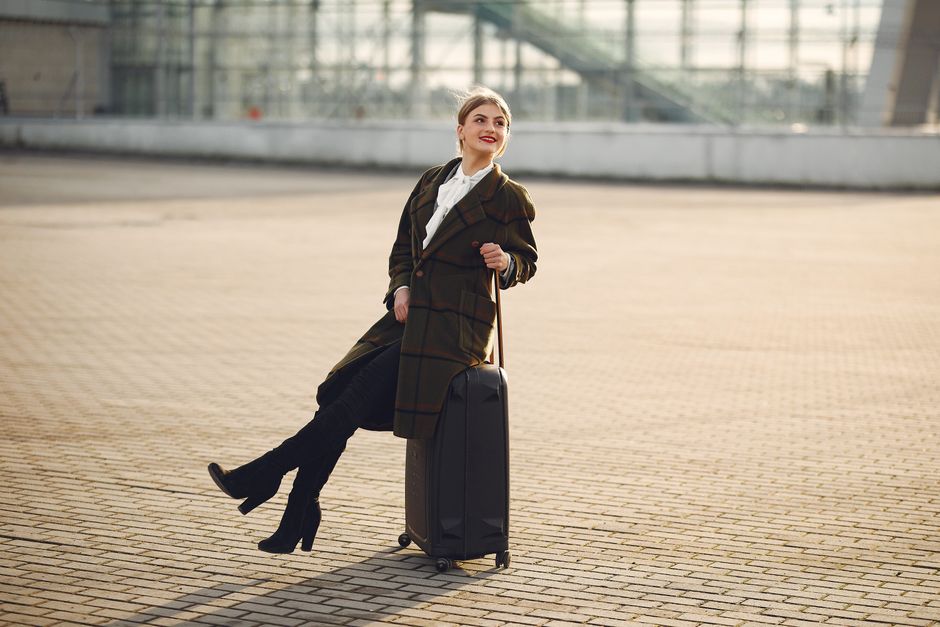
Every other accessory is secondary. The wrong bag creates friction at check-in, security, overhead bins, and baggage claim that no packing cube set can fix.
For trips under 5 days: carry-on only with the Osprey Fairview 40L
The Osprey Fairview 40L ($160) is the best women’s carry-on travel backpack right now. It fits international carry-on dimensions (22x14x9 inches), weighs 2.86 lbs empty, and has a women’s-specific harness with a suspended mesh back panel built for shorter torsos. It opens clamshell — not top-loader, which matters at security. Hip belt pockets hold a phone and passport. The Osprey Farpoint 40L is the unisex version if the fit feels off.
For rolling luggage, the Away Carry-On ($275) holds 39.8L with a built-in compression system. The ejectable battery matters — airlines require removable power banks for carry-on approval, and an integrated non-removable battery grounds your bag at check-in.
For longer trips: what to look for in a checked bag
A 26-inch spinner suitcase handles most multi-week itineraries. The Samsonite Winfield 2 Hardside (around $180 on sale) weighs 9.7 lbs empty with true 360-degree spinner wheels. Avoid four-wheel spinners under $80 — the wheels are the first failure point, and a broken wheel means dragging your suitcase sideways through a crowded terminal. That experience is exactly as bad as it sounds.
The daypack problem
Rolling luggage creates a gap: you do not want to drag your full suitcase to a museum or day trip. The Matador Beast18 ($119) packs to fist size, holds 18L, and handles light rain. It solves the day-excursion problem without adding a permanent extra bag to your packing list.
Flight Comfort Accessories: What Actually Works
Most flight comfort products fail. Eye masks slip. Foot hammocks are gimmicks. Three things genuinely improve a long flight, and nothing else on that airport display rack earns its place in your bag.
The Trtl Pillow Plus ($59.99) wins the neck pillow category outright. The internal support lets your head tilt sideways — the position you actually sleep in — instead of pushing it forward the way a horseshoe pillow does. It clips to your carry-on handle and weighs 5.3oz. Under 6 hours of flight time, skip it entirely.
Compression socks at 15-20 mmHg for any flight over 4 hours. Leg swelling on long flights is common; deep vein thrombosis risk is real and underestimated. Comrad Knee-High Compression Socks ($38) are the accessible starting point — medical-grade compression without a clinical look.
And the headphones, already covered. Those three items account for the entire comfort improvement available on a plane. Everything else is noise.
When to Leave the Accessories Behind

Should you pack a travel hair dryer?
No. Any accommodation rated 3 stars or above provides one. A dual-voltage travel dryer is dead weight for 95% of trips. Check your hotel listing before packing one — if the listing specifies “hair dryer in room,” you have your answer.
Do you need a travel towel?
Only for hostel stays or camping. Hotels provide towels. Budget travelers doing hostel-only itineraries need one; everyone else does not. Buying a travel towel for a trip that includes standard hotel stays is a waste of $15 and packing space.
What about pre-packaged travel toiletry kits?
Skip them. They bundle products you did not choose at sizes you may not need. Decant your actual products into TSA-approved bottles — this takes 10 minutes and costs $5 in empty containers versus $30 for a kit full of unfamiliar brands.
The Accessories That Prevent the Worst Travel Days
Three scenarios account for most serious disruptions: a dead phone in a foreign transit hub, a stolen passport, and a delayed bag with no change of clothes. Accessories address all three directly.
Dead phone at a foreign airport is genuinely dangerous if you do not speak the local language or have an offline map. The Anker PowerCore 10000 costs $25. There is no trip where that cost is not worth it.
Stolen or lost passport: keep it in the Pacsafe hidden belt against your body when moving between cities. Before departure, email yourself a photo of the ID page — this costs nothing and cuts embassy replacement time in half.
Delayed bag: pack one outfit, daily medications, and three essential skincare products in your carry-on. No accessory required. Just the decision to do it. The Bagsmart organizer keeps that carry-on navigable when you are digging through it at midnight in a hotel lobby after a 14-hour delay.
The travelers who move through trips with the least friction own fewer accessories and always know exactly where each one is. That was true at the top of this list, and it stays true no matter how many trips you take.