

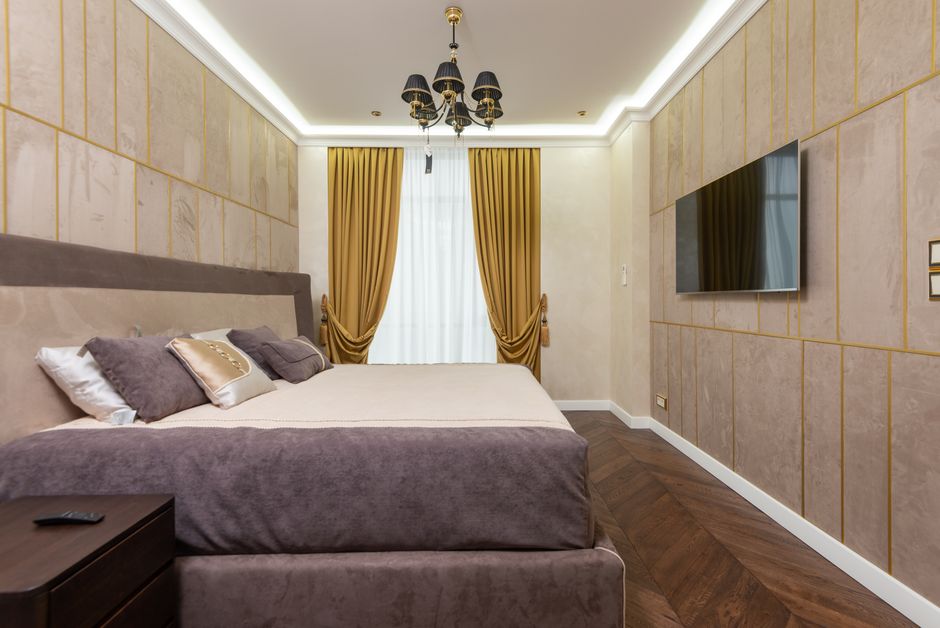
The overhead light is on. The room is technically lit. And it still feels like a waiting room — flat, bright, and vaguely stressful to sit in at 9pm.
That experience has a structural cause, and fixing it doesn’t require a renovation. It requires understanding what lighting layers actually do — and why most bedrooms are missing two of the three.
Why a Single Overhead Light Always Feels Wrong
This is a physics problem before it’s a design problem.
When one light source illuminates a room from above, it casts shadows downward and eliminates depth contrast across every vertical surface. Your walls, headboard, and furniture all read as the same flat plane. The brain doesn’t register this as “clean” — it registers it as institutional. Hospital ward. Open-plan office. School classroom. These spaces share one structural feature: a single plane of illumination from directly overhead.
The eye reads depth through gradients — areas of relative brightness against shadow. Multiple low-intensity sources at different heights and positions create exactly this. A bedside lamp at 50cm height throws a pool of warm light upward and outward. A soft LED strip behind a headboard pushes diffused light against the wall behind it. A floor lamp angled into a corner creates a brightness gradient that makes the room feel deeper, not just brighter. None of these sources individually do what a ceiling fixture does. Together, they do something a ceiling fixture never can.
Why fixture height matters as much as brightness
Light placed at or below eye level — roughly 100–160cm when seated or lying down — reads as intimate. Light positioned above eye level reads as functional and task-oriented. This explains why a candlelit restaurant feels categorically different from a fluorescent cafeteria even at similar total brightness. The position of the source is doing as much work as the bulb itself.
The contrast principle, explained simply
You don’t need bright light everywhere. You need contrast between lit and unlit areas. A 400-lumen bedside lamp in an otherwise dim room creates more perceived warmth than a 1600-lumen ceiling fixture trying to cover everything equally. Cozy is not “dim.” Cozy is directional.
The Three Lighting Layers — What Each One Actually Does
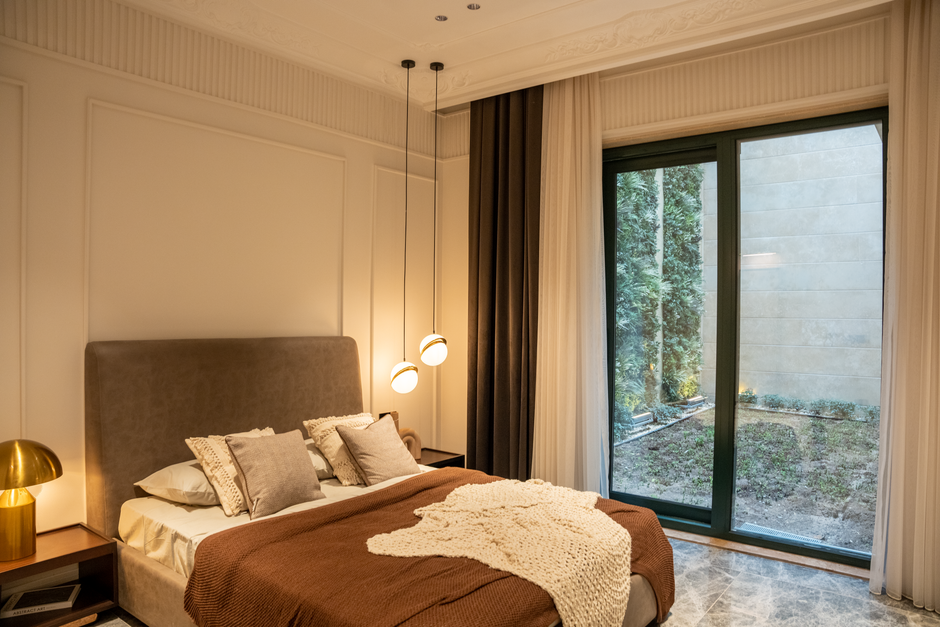
Every well-lit bedroom uses three layers. Most bedrooms have one. Here’s how they compare:
| Layer | Job | Best Fixture Type | Target Lumens | Target Kelvin | Approx. Budget |
|---|---|---|---|---|---|
| Ambient | General fill, background brightness | Dimmable ceiling pendant or recessed fixture | 400–800 total | 2700K max | $40–120 |
| Task | Directed light for reading, getting dressed | Bedside lamps, wall sconces, adjustable arm lamps | 300–500 at source | 2700–3000K | $30–150 per lamp |
| Accent | Mood, depth, visual warmth | LED strips, small table lamps, candles | 100–300 | 2200–2700K | $15–60 |
Most bedrooms already have ambient — usually that one overhead fixture. Task lighting gets layered in when the overhead fails at close work. Accent lighting is what almost nobody installs, and it’s the layer that produces the cozy effect people describe but can’t pin down.
The Philips Hue approach
Philips Hue White Ambiance bulbs ($15–18 each, A19 format) can cover all three layers in one system. Set them to 2200K at 20% brightness for accent use, 2700K at 60% for ambient fill, and 3000K at full brightness for task reading. One bulb type, three use cases — worth it only if you’re using a smart dimmer or the Hue Bridge app. For a two-lamp bedroom setup, budget $50 in bulbs plus a $60–65 Lutron Caseta smart dimmer to get the full range of control.
When simpler is the smarter call
GE Relax HD LED bulbs (60W equivalent, 2700K, $8 for a 4-pack) in a pair of bedside lamps will outperform a smart lighting system at five times the cost if you’re not actively using the dimming features. The layer matters more than the technology running it.
Bottom Line: Add the accent layer first. It costs the least and delivers most of the perceived warmth you’re chasing.
The Kelvin Rating That Separates Cozy from Clinical
2700K is the upper limit for a bedroom. Go above it and no amount of careful layering saves you.
Color temperature is measured in Kelvin. Lower numbers mean warmer, more orange light. Higher numbers mean cooler, more blue-white light. Candlelight sits around 1800K. Warm white LEDs run 2700–3000K. Neutral white is 4000K. Daylight bulbs hit 5000–6500K.
Above 3000K, bedroom lighting begins triggering a daylight-response in how your visual system processes the environment. Your brain reads “daytime” and suppresses melatonin production accordingly. You can build a perfect three-layer setup and undo all of it with the wrong bulb temperature. This is the mistake most people never diagnose because they’re looking at fixture placement, not the bulb spec printed on the box.
Three bulbs compared directly
- GE Refresh HD (5000K, 60W equivalent): Marketed as “energizing.” It is. Wrong room — use it in a home office or bathroom vanity, not a space you’re trying to wind down in.
- GE Relax HD (2700K, 60W equivalent): The correct call for every lamp in a bedroom. $8 for a 4-pack, works in any standard fixture, no app required.
- Feit Electric Color Selectable (2700K / 3000K / 5000K switchable): Practical for shared or dual-use rooms. If it’s going in a bedroom, set it to 2700K and leave it there permanently.
The 2200K accent zone
Govee RGBIC LED strips ($25–35) dialed to 2200K warm white at 15–20% brightness create the gradient effect that makes a bedroom feel finished rather than functional. Run them along the back lip of a headboard facing the wall — the light diffuses across the surface instead of pointing directly at your eyes. That diffusion is where the warmth comes from.
Four Things That Undo All Your Layering Work
Getting the layers right takes an afternoon. These mistakes undo it.
- No dimmer switch. A 2700K bulb at full brightness in a small bedroom is still too bright for evening use. Without dimming capability, you can’t tune each layer to time of day. A dimmer switch delivers the highest return on investment of any single bedroom lighting upgrade — install one before buying anything else.
- Mixed color temperatures across fixtures. One 2700K bedside lamp next to a 4000K desk lamp creates visual dissonance. Your eye detects the mismatch even when your brain can’t name it. Buy the same Kelvin rating for every bulb in the room and don’t deviate.
- One bright point in an otherwise dark room. A high-lumen bedside lamp — 800 lumens or more — with no other source in the room creates a harsh hot spot, not warmth. If one lamp runs 500 lumens, add a 150–200 lumen accent source on the opposite side to balance the field.
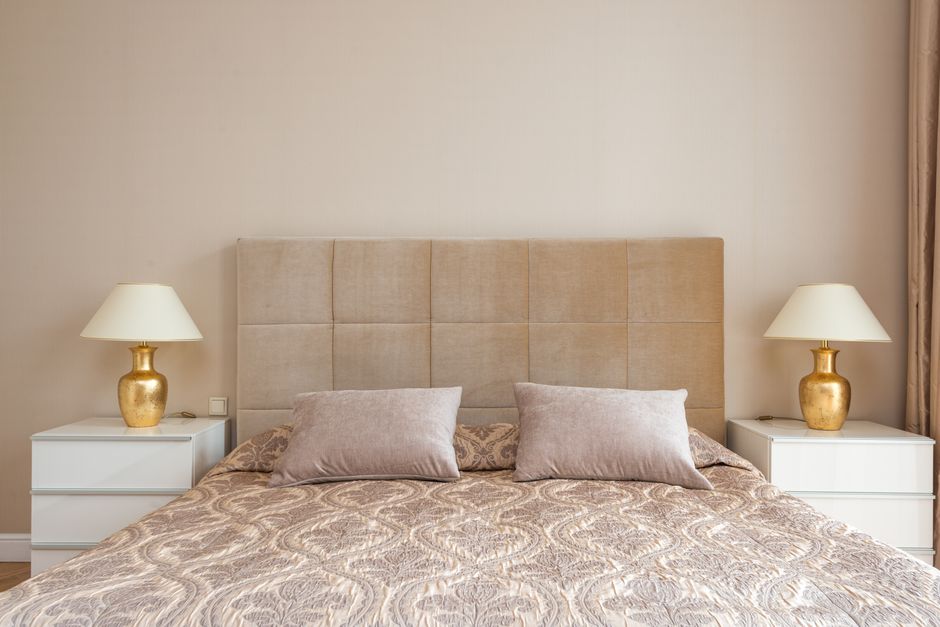
- Perfectly symmetrical placement. Two identical lamps on matching nightstands flanking the bed is the default hotel room configuration. It reads as functional, not personal. Break the symmetry: different lamp heights, one table lamp paired with one wall sconce, or a floor lamp placed asymmetrically near a reading chair.
Building the Full Setup on a Real Budget
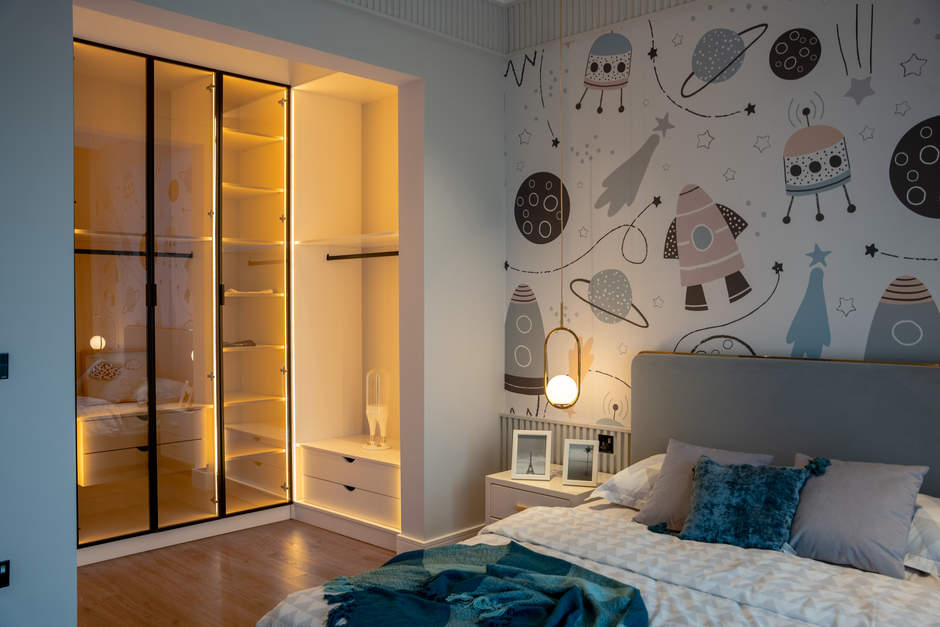
Priority order: dimmer switch first, bedside lamps second, accent layer last.
A complete layered bedroom setup runs $120–175 if you buy deliberately. One smart dimmer — the Lutron Caseta Wireless ($60–65) is the right choice for older homes because it doesn’t require a neutral wire, which most standard smart dimmers do. Two bedside lamps at $30–40 each: the IKEA RANARP at $35 is clean, adjustable, and doesn’t compete with the rest of the room. Four GE Relax HD bulbs ($8 for a 4-pack). One Govee LED strip for the headboard accent ($30). Total: under $175 for a bedroom that reads as considered rather than default.
This is not interior design advice for your specific home. Bedroom size, wall color, ceiling height, and existing fixtures all change how layers interact. Test color temperature with a single bulb before buying multiples — the difference between 2700K and 3000K is obvious in person and completely invisible on a product listing.
The overhead light stays off after 8pm. The bedside lamps come on at 40% via the dimmer. The LED strip behind the headboard fills the rest. The room is lit. It doesn’t feel lit. That’s exactly the gap the layers fill — same room, completely different space.