

Most living rooms lose their best light because the sofa, television, and curtains were placed for convenience instead of the sun. Rearrange the room around the last useful daylight, then add lamps only where the layout still falls short.
Find the light before moving the sofa
Start with the sun, not the furniture. Evening light changes direction and intensity quickly, so a layout that looks bright at 3 p.m. can feel dull by 6 p.m. The goal is not to make every corner equally bright. The goal is to keep useful light on the seating area while reducing glare on screens and reflective surfaces.
Map the last two hours of daylight
Spend three evenings watching the room at 4 p.m., 5 p.m., and 30 minutes before sunset. Write down which wall receives direct light, which wall receives soft reflected light, and which corners go dark first. Use masking tape to mark the edge of the sun patch on the floor. A south-facing window often gives stronger light for longer periods, while a west-facing window can create sharp glare directly into the room late in the day. North-facing windows usually provide softer, steadier light but may need help sooner after sunset.
Take one photo from the main seat at each time. The photos will show problems that are easy to miss while you are standing in the room, especially bright windows behind a television or dark furniture blocking the lower half of a window.
Protect the best sightline
Choose the seat where you want to read, talk, or watch television after work. That seat should face across the room toward the window or a pale wall, not directly into a bright pane of glass. Keep the television perpendicular to the main window when possible. This reduces reflected glare and lets you use the window as a soft side light rather than a competing light source.
Keep tall storage, bookcases, and plants below the window line unless the window has too much direct glare. A low console or bench usually preserves more evening light than a cabinet that rises 72 inches high. The clear winner for a dim room is an open path from the window to the seating area.
Use the window wall as a lighting plan
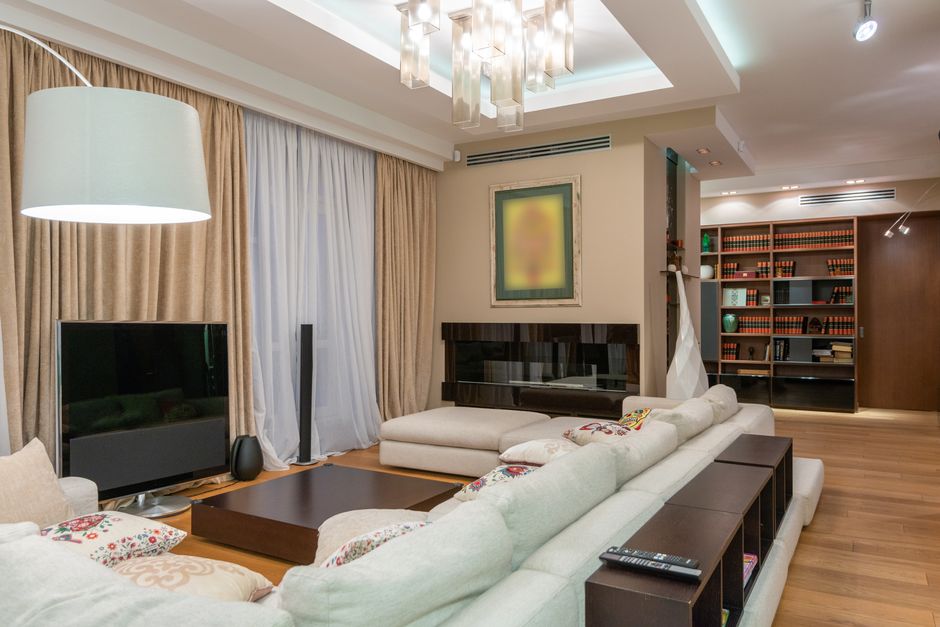
Do not treat the window as a decorative background. It is the room’s main evening light source, and the furniture should help that light travel. Pulling every piece against the wall is the common mistake. It creates a hard border around the room, blocks low-angle light with bulky furniture, and leaves the center feeling empty.
Keep a clear light path
Leave at least 24 inches of open floor between the window and the nearest large furniture whenever the room allows it. A sofa can sit closer if its back is low, but a tall sectional placed across the window will cut the room in half visually. Keep curtains inside the window recess or close to the frame instead of allowing heavy fabric to bunch over the glass.
For a narrow room, place the sofa on the longest solid wall and angle one chair toward the window. For a wide room, float the sofa 12 to 24 inches from the wall if that creates a better route for light and walking. The arrangement should give daylight two paths: across the floor and along the wall behind the seating.
Match each layout to the evening problem
Choose the row that matches your biggest problem and make that change first. Do not move five pieces at once. If the room improves after one change, the reason becomes clear. If it gets worse, you can undo one decision instead of rebuilding the whole space.
Which lamps help after the layout is right?
Buy lighting only after the furniture passes the two-evening test. Lamps cannot fix a sofa that blocks the window or a television pointed at the sunset. They can fill a specific dark zone, soften contrast, or give you control after natural light disappears.
Do you need a smart bulb?
For a lamp near the sofa, the Philips Hue White Ambiance A19 E26 is the best choice when you want warm-to-cool control. Choose it for one frequently used lamp, not every bulb in the room. The smart control earns its cost when you change brightness every night. If you only use one fixed setting, a standard dimmable LED costs less and does the job.
What is the best lamp for a dark reading corner?
The IKEA RANARP floor/reading lamp is the strongest practical pick for a corner that needs directed light. Aim the shade toward the book or chair, not at the wall behind you. That gives you useful light without washing the entire room in glare. It is the right answer for a reading seat; it is the wrong answer if the whole room lacks ambient light.
Can a dimmer improve the existing layout?
Yes. It is the best fix when the room has one harsh overhead light and no convenient switch near the seating. Use a qualified electrician if the wiring is unfamiliar. Do not install a dimmer on a fixture or bulb that is not marked dimmable.
These examples prove the larger point: choose the tool for the lighting problem. For a dark corner, use a directed floor lamp. For changing evening mood, use a controllable bulb. For a harsh ceiling fixture, use a compatible dimmer. Buying all three before testing the layout wastes money.
Fix glare, shadows, and the mistakes people repeat
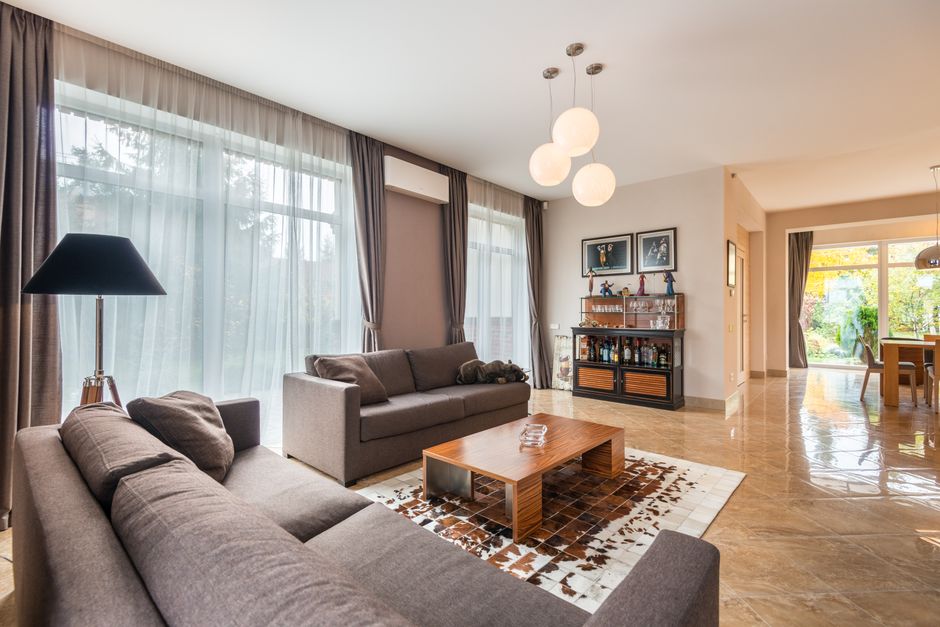
The worst evening-light mistake is chasing brightness. A room can have plenty of light and still feel uncomfortable because the contrast is wrong. Fix the source of the glare or shadow first.
- Do not put the television opposite a west-facing window. Sunset reflections will overpower the screen. Move the screen perpendicular to the window or close a sheer curtain before sunset.
- Do not push a tall sectional across the brightest window. The back blocks low-angle light and makes the room feel heavier. Use a low-backed sofa or place the sectional on a solid wall.
- Do not rely on one ceiling fixture. One overhead source creates a bright center and dull edges. Split the room into at least three zones: seating, reading, and circulation.
- Do not use a bare high-output bulb in a small room. A 1,600-lumen bulb can create glare when a shaded 800-lumen bulb would be more comfortable. Match brightness to the task.
- Do not cover the entire window with thick curtains. Use a sheer layer for late sunlight and keep the heavier panel available for glare or privacy.
- Do not buy another lamp when the problem is furniture. If the sofa blocks the window, a new lamp adds clutter without restoring daylight. Move the sofa first.
- Do not ignore reflective surfaces. Glass tables, glossy cabinets, mirrors, and bright screens can bounce sunset light into your eyes. Rotate or relocate the worst offender.
If the room still feels flat, add a pale rug, light-colored wall art, or a matte side table near the dim zone. These surfaces spread light more gently than a mirror. The best evening layout is the one that keeps daylight on the seating area, controls glare at the screen, and leaves every walkway clear.
Move the furniture to protect the last useful daylight, then add only the lighting needed to cover the remaining dark spots.