

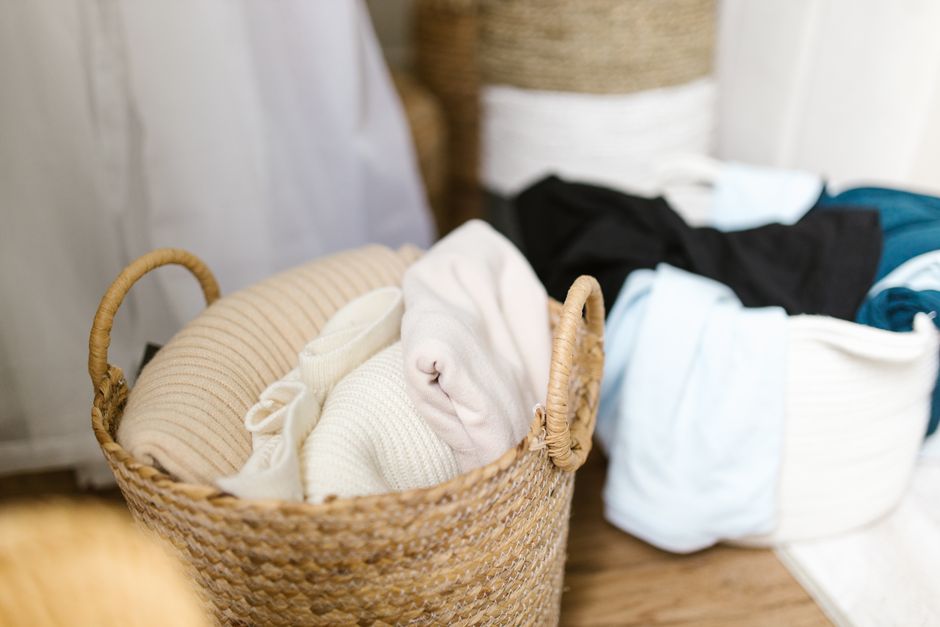
How do you stop a small craft and paperwork corner from turning into a pile of fabric scraps, envelopes, receipts, and half-finished projects? The usual answer is another hard plastic box, but that often makes the corner feel more like a supply closet than part of the home. Soft storage works better when the space needs to look calm, adapt to changing projects, and stay comfortable in a bedroom, dining room, or living room.
The challenge is not finding a basket. It is assigning every item a sensible home without making the corner hard to use. Paper needs support and protection from bends. Craft supplies need quick access and flexible volume. The best setup separates those jobs, measures the furniture first, and leaves enough empty space for the next project.
The Short Verdict: Separate Active Supplies from Important Papers

For daily craft work
Put the items you touch every day in one open soft bin within arm’s reach, because a quick drop zone keeps scissors, tape, yarn, cutting mats, and unfinished work from spreading across the desk, while a bin that stays at least one-third empty can absorb a new project without forcing you to reorganize the whole corner.
For paperwork
Keep documents upright in labeled folders or a firm file insert, then place that insert inside a softer basket if the corner sits in a visible room, because papers need shape and order while the surrounding storage needs to look relaxed, and mixing receipts, craft paper, and confidential forms in one deep container creates a sorting job you will avoid.
My strongest recommendation is to create two visible zones: an open active-work zone for supplies and a closed or upright archive zone for paperwork. That division solves more problems than buying a larger organizer. It also makes the corner easier for another person to use without asking where every item belongs.
When storage has one job, it stays useful longer. The basket holds motion; the file insert holds structure.
How to Set Up a Small Corner in 30 Minutes
Start with the furniture you already own. A narrow desk, one shelf, or the unused space beside a cabinet can hold a strong system if you measure before shopping. The goal is not to fill every inch. Leave enough floor, shelf, and tabletop space for the corner to breathe.
Use this five-step reset
- Empty the corner completely. Place every supply and paper item on the floor or table. Group by action, not by object: write, post, cut, sew, wrap, file, and archive.
- Choose the active group. Select the items you use at least once a week. These belong in the easiest-to-reach soft bin, not on a high shelf or behind a stack of boxes.
- Measure three points. Record the opening width, usable depth, and vertical clearance. Subtract 1 inch from each measurement so the bin can slide in and out without catching.
- Give paperwork a vertical home. Use folders, a magazine file, or a firm insert for documents. Label by action, such as Pay, File, Reply, School, or Project, rather than by vague labels like Miscellaneous.
- Reserve one unfinished-project space. A single bin or tote should hold work that is in progress. Without this buffer, every new project will occupy the desktop.
Check the weight before you fill the bin
Soft storage handles are often the first failure point. Paper becomes heavy quickly, especially when a bin holds catalogs, notebooks, and old receipts. Test the empty container by lifting it from both handles, then load it gradually. Keep dense paper near the bottom and lighter fabric near the top. If the sides bow outward or the base sags, move the contents to a firm-sided container. A beautiful bin that cannot move safely will become permanent clutter.
Finish by taking a photo of the organized corner. The image gives you a simple reset reference when the space gets busy again. This process matters more than buying a matching set because it assigns a location before the storage enters the room.
Which Soft Storage Products Earn Their Space?
Product choice matters after the layout works. Prices below reflect typical listed prices around 2026 and can change by retailer, color, and size. The best value is not always the cheapest bin; it is the container that fits the furniture, carries its intended load, and stays easy to pull out.
My clear picks by corner type
For a cube shelf beside a desk, the IKEA DRÖNA wins because its low price makes it practical to assign one bin to fabric, one to tools, and one to unfinished work. For a shallow shelf, the mDesign bin is the better choice because its smaller footprint reduces the risk of wasted depth. If the corner sits in a living room, the 3 Sprouts bin earns its higher price through a more finished appearance. For heavier paper projects, choose The Container Store canvas option, but keep confidential documents in folders or a lockable file box inside it.
Do not judge these bins by color alone. Check the handle stitching, base shape, washable lining, and the gap between the bin and the shelf. A 13-inch cube cannot use a shelf with only 12 inches of clearance, even if the published dimensions look close.
When Not to Buy Soft Storage
Do I need soft storage for tax records or legal papers?
No. Use a firm, lidded file box for tax records, passports, birth certificates, and documents that need long-term protection. A soft bin can collect dust, collapse at the sides, and offer little defense against a leaking drink or a damp floor. An IKEA KUGGIS box or another rigid, lidded polypropylene container makes a better archive choice. Soft storage can sit around that box to keep the corner visually calm, but it should not serve as the only barrier between important papers and household accidents.
When should I choose drawers instead?
Choose drawers when small items disappear in open bins. Beads, clips, stamps, thread spools, and adhesive tabs need shallow compartments because a deep basket turns every search into a small excavation. A drawer unit also works better when children or pets can reach the storage. The trade-off is capacity: drawers cost more per inch and limit the shape of the contents. My verdict is clear: use soft bins for bulky, flexible materials and drawers for small pieces that need visual control.
What mistake makes soft storage look messy?
The most common mistake is buying several large bins before deciding what each one holds. Oversized bins encourage mixed categories, hide supplies, and become too heavy to move. Keep at least one-third of each active bin empty, limit each bin to one main action, and label the front in plain language. If you need to dig through the same basket twice in one week, the problem is not discipline; the container has the wrong shape or job.
Soft storage will keep evolving toward lighter materials, washable fabrics, and furniture-sized modules that move between rooms. The strongest systems will still follow the same principle: give creative work room to change while giving important papers a firm place to stay.